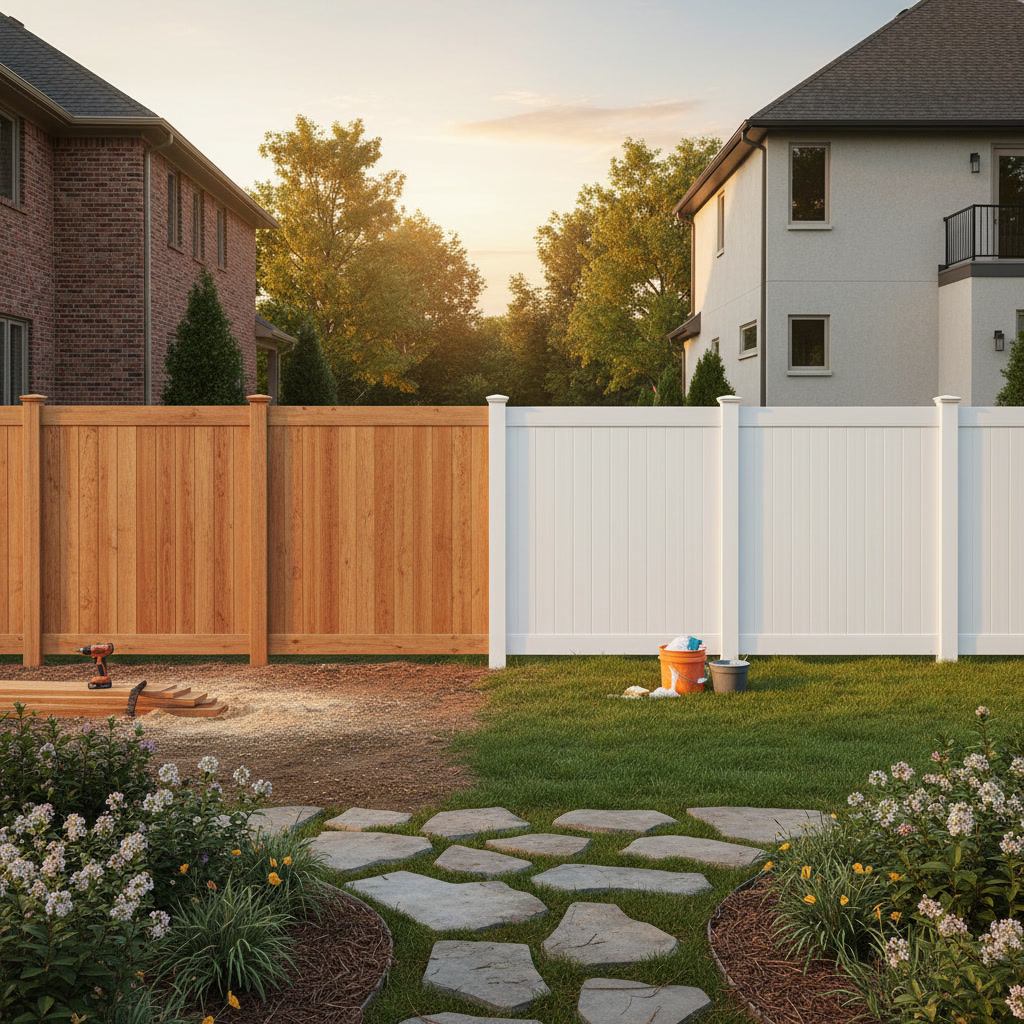
Deciding between wood vs vinyl fencing depends on your budget, maintenance preferences, climate conditions, and long-term property goals. Wood offers natural beauty and customization but requires regular upkeep, while vinyl provides durability and low maintenance at a higher initial cost. Understanding how each material performs in real-world conditions helps you make the right choice for your yard.
Why Your Fence Material Choice Matters for Long-Term Value
Your fence serves multiple purposes beyond marking property boundaries. It provides privacy, enhances curb appeal, protects pets and children, and contributes to your home’s overall value. The material you select determines how well your fence performs these functions over decades, not just years.
A poorly chosen fence material leads to premature replacement, ongoing repair costs, and frustration with appearance degradation. In contrast, matching the right material to your specific situation creates a lasting investment that maintains both function and beauty with minimal hassle.
How New England Weather Affects Fence Materials
Climate plays a decisive role in fence performance. Massachusetts experiences freezing winters, humid summers, significant temperature swings, and substantial precipitation. These conditions test every outdoor material.
Wood expands and contracts with moisture changes, making it vulnerable to warping, splitting, and rot if not properly treated and maintained. Vinyl remains dimensionally stable through temperature fluctuations but can become brittle in extreme cold, particularly lower-quality products. Understanding how your local environment interacts with each material prevents costly mistakes.
Wood Fencing Characteristics and Performance
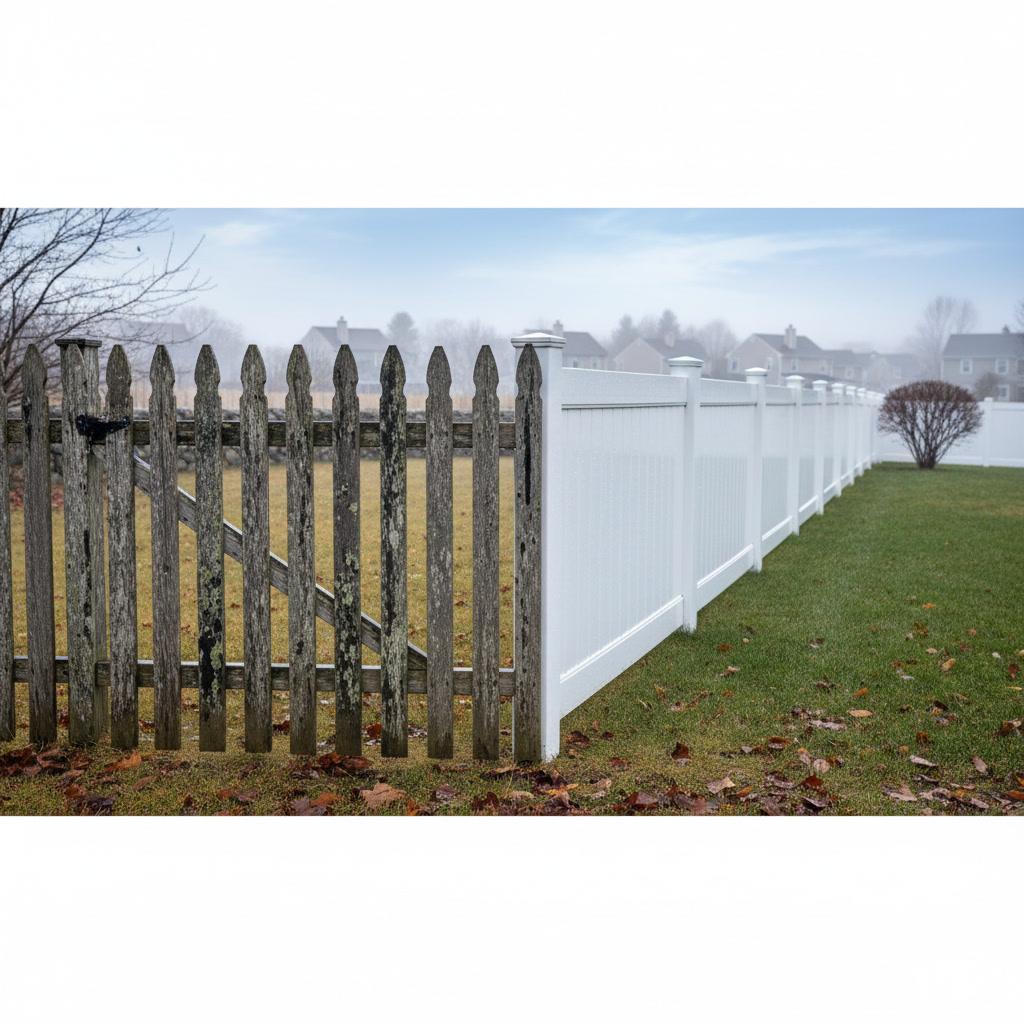
Wood remains the traditional fencing choice for good reason. Cedar and pressure-treated pine dominate the market, each offering distinct advantages. Cedar contains natural oils that resist rot and insect damage, while pressure-treated lumber undergoes chemical treatment for enhanced durability.
Quality cedar fencing can last 15 to 20 years with proper maintenance, while pressure-treated pine typically performs well for 10 to 15 years. Wood accepts stains and paints readily, allowing you to change your fence’s appearance or refresh its protection layer every few years.
The natural grain and texture of wood create warmth and character that synthetic materials struggle to replicate. Wood integrates seamlessly with hardscape features and garden designs, particularly in traditional or rustic landscape settings.
Vinyl Fencing Characteristics and Performance
Vinyl fencing consists of polyvinyl chloride (PVC) engineered to resist weathering, insects, and rot. Quality vinyl products include UV inhibitors and impact modifiers that extend lifespan and prevent color fading.
Premium vinyl fencing can last 25 to 30 years or more without painting, staining, or sealing. The material never splinters, making it safe for households with children and pets. Vinyl maintains its appearance with only occasional washing, requiring no scraping, sanding, or chemical treatments.
However, vinyl offers limited color options, typically white, tan, and gray variations. Once installed, you cannot change the color. The uniform appearance lacks the organic variation of natural wood, which some homeowners find less visually appealing in certain landscape contexts.
Cost Comparison: Initial Investment and Lifetime Expenses
Wood fencing typically costs 30 to 50 percent less than comparable vinyl products at installation. A standard six-foot privacy fence in wood might run $15 to $30 per linear foot installed, while vinyl ranges from $25 to $40 per linear foot.
The calculation changes when you factor in maintenance. Wood requires staining or sealing every two to three years at approximately $1 to $3 per linear foot in materials, plus labor if you hire professionals. Over 20 years, these costs accumulate significantly.
Vinyl eliminates recurring maintenance expenses. Despite the higher upfront cost, vinyl often proves more economical over its lifespan when you account for the time and money saved on upkeep. Your decision should weigh both immediate budget constraints and long-term financial planning.
Maintenance Requirements and Time Investment in Essex County
Wood demands consistent attention to maintain structural integrity and appearance. You must inspect annually for rot, insect damage, and loose boards. Cleaning, sanding, and refinishing become regular tasks that consume weekend hours throughout the fence’s life.
Moisture accumulation accelerates wood decay, particularly where fence posts contact soil. Even pressure-treated lumber benefits from proper drainage and periodic inspection. Neglecting maintenance shortens lifespan dramatically and degrades appearance within a few years.
Vinyl requires only periodic washing with soap and water to remove dirt, mildew, and environmental residue. No sanding, painting, or chemical treatments are necessary. This low-maintenance profile appeals to busy homeowners who value their time or lack interest in hands-on property upkeep. The material particularly suits properties already requiring significant landscape maintenance effort, allowing you to focus attention on plantings rather than fencing.
Aesthetic Flexibility and Design Options
Wood offers unmatched customization potential. You can select from numerous fence styles including board-on-board, shadowbox, picket, split rail, and horizontal contemporary designs. Wood accepts custom heights, spacing, and decorative elements easily.
Staining opens an entire color spectrum, from natural wood tones to bold contemporary hues. You can match existing structures, coordinate with patios and walkways, or create contrast for visual interest. This flexibility makes wood ideal when aesthetics drive your decision.
Vinyl manufacturers offer popular fence styles, but options remain more limited. The material cannot be cut into intricate patterns as easily as wood. Color choices stay within neutral ranges, and the finish maintains a consistent, synthetic appearance. For homeowners prioritizing design freedom and natural materials, wood holds a clear advantage.
Installation Considerations and Timeline
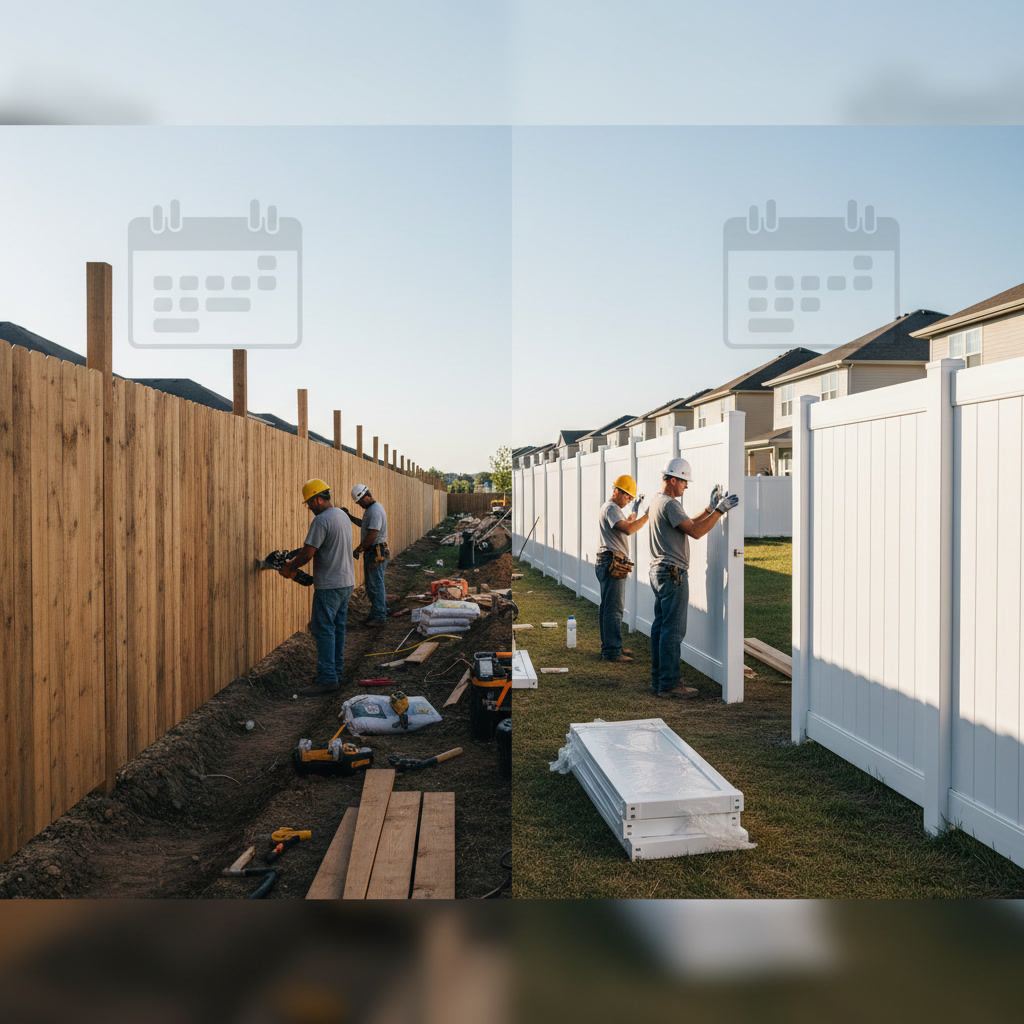
Wood fence installation typically proceeds faster than vinyl for experienced crews. Wood’s workability allows on-site adjustments and custom fitting to terrain irregularities. Installers can cut, trim, and modify boards quickly to accommodate slopes, corners, and obstacles.
Vinyl requires more precise planning and measurement because panels come in fixed sizes. Adjusting to uneven ground may necessitate stepped sections or additional grading. The material’s rigidity makes field modifications more challenging, potentially extending installation time.
Both materials require proper post installation with concrete footings to ensure stability. Post spacing, depth, and alignment determine fence longevity regardless of surface material. Professional installation through experienced fencing contractors ensures proper techniques that prevent premature failure from structural issues.
Repair and Replacement Realities
Wood fence repairs are straightforward and economical. Individual damaged boards can be replaced without affecting surrounding sections. Most homeowners can handle minor repairs themselves with basic tools and materials from local suppliers.
Vinyl repairs prove more challenging. Damaged panels often require complete section replacement rather than individual piece repair. Color matching becomes difficult as vinyl weathers and fades slightly over years, making new panels visibly different from aged sections.
However, vinyl suffers damage less frequently than wood. The material resists rot, insects, and moisture-related deterioration that commonly afflict wood fences. While individual repairs cost more when needed, their infrequency offsets this disadvantage for many property owners.
Environmental and Sustainability Factors
Wood represents a renewable resource when sourced from responsibly managed forests. Cedar and pine grow relatively quickly and sequester carbon during growth. At end of life, wood fence materials biodegrade or can be repurposed, burned for energy, or composted.
The chemical treatments preserving pressure-treated lumber raise environmental concerns. Modern treatments have improved from earlier toxic formulations, but disposal still requires consideration. Natural cedar offers a more environmentally friendly wood option without chemical treatment.
Vinyl production consumes petroleum resources and involves chemical processes with environmental impacts. The material does not biodegrade, persisting in landfills indefinitely. However, vinyl’s longevity means less frequent replacement, reducing overall material consumption over decades. Some manufacturers now incorporate recycled content into vinyl fencing products, improving sustainability profiles.
Making the Right Choice for Your Property
Your decision hinges on prioritizing factors specific to your situation. Choose wood if you value natural aesthetics, enjoy hands-on maintenance, work within a tighter budget, want design flexibility, or plan to change fence color periodically. Wood suits traditional homes, gardens with natural design elements, and properties where hardscape elements integrate into cohesive landscape design.
Select vinyl if you prioritize low maintenance, want maximum longevity, can invest more upfront, prefer consistent appearance without ongoing work, or lack time for regular fence care. Vinyl performs well for busy households, rental properties, and homeowners who value convenience over customization.
Consider combining materials strategically. Some homeowners install vinyl fencing in high-visibility front yards for curb appeal with minimal maintenance, while using wood in backyards where they can enjoy its natural beauty and accept the upkeep requirements. D.S. Landscaping & Construction can assess your specific property conditions, budget parameters, and aesthetic preferences to recommend the optimal solution.
Finding the Perfect Fence for Your Outdoor Space
Neither wood nor vinyl holds universal superiority. Each material excels in different scenarios based on your priorities, property characteristics, and long-term plans. Wood delivers natural beauty and design flexibility with higher maintenance demands, while vinyl offers durability and convenience at increased initial cost. Evaluating your specific needs against each material’s strengths guides you to the right decision.
Professional installation ensures your fence performs as expected regardless of material choice. Proper post setting, panel alignment, and drainage considerations determine longevity more than material selection alone. D.S. Landscaping & Construction brings expertise in both wood and vinyl fence installation throughout Essex County, helping property owners make informed decisions and execute flawless installations. Contact us at 978 786 2087 to discuss your fencing project and receive a detailed assessment tailored to your property’s unique requirements.