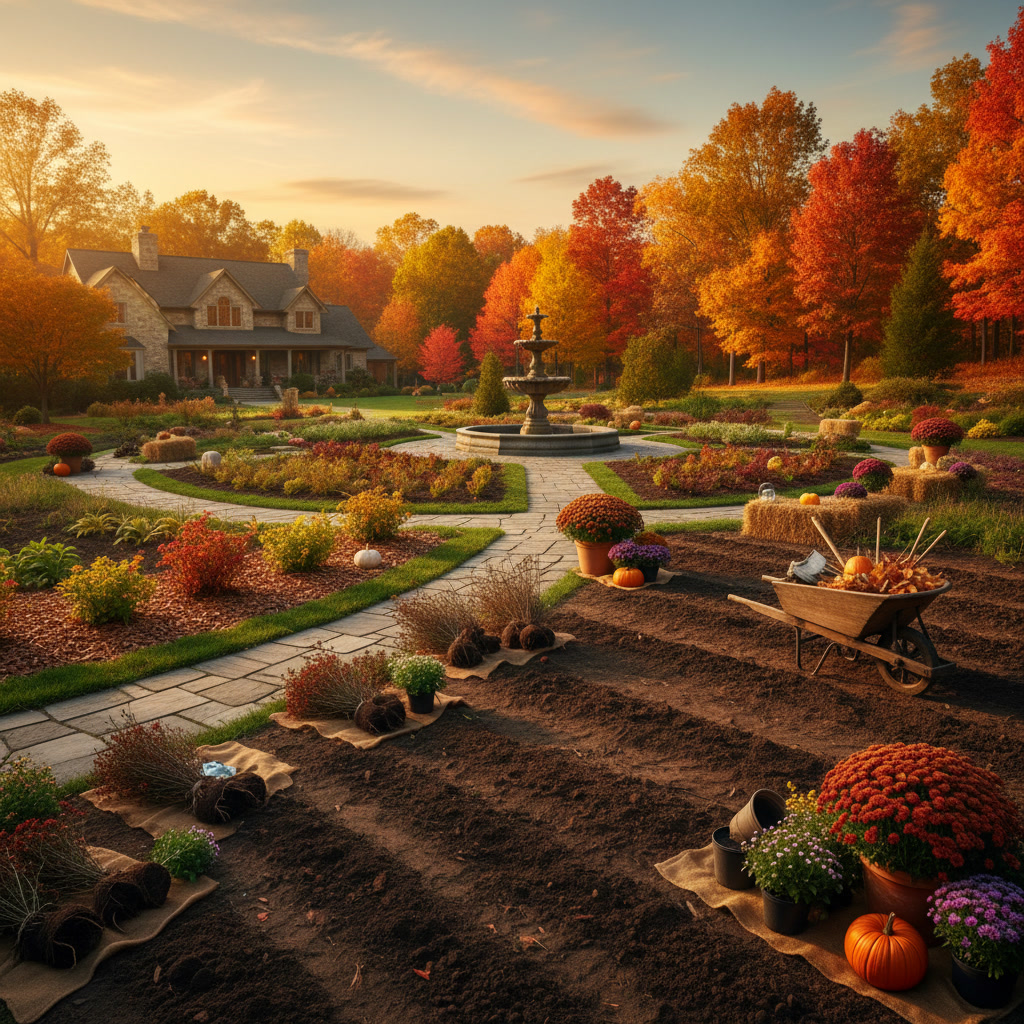
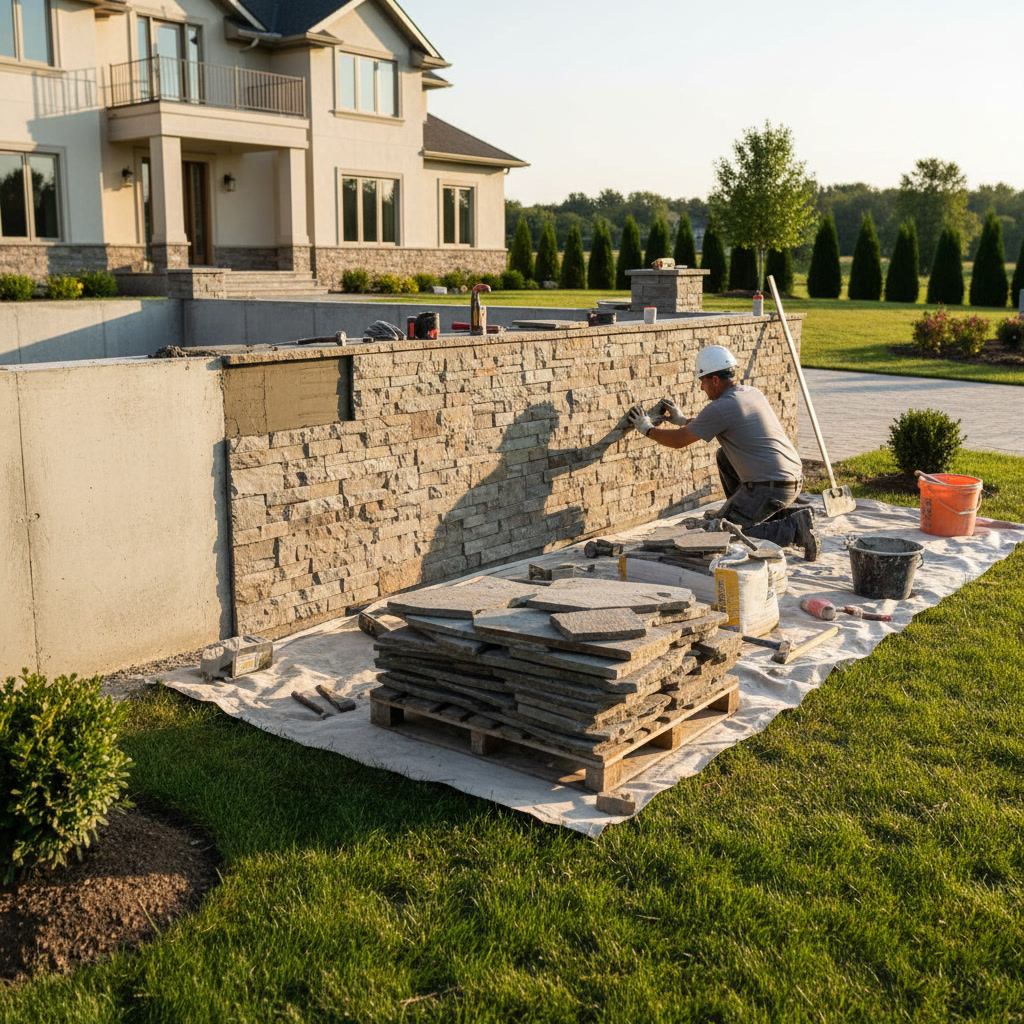
Stone veneer transforms bare concrete foundations into elegant architectural features that significantly boost curb appeal and home value. The stone veneer installation benefits extend beyond aesthetics, offering weather resistance, durability, and protection for your foundation while adding 6-10% to property value. Unlike full-depth stone installation, veneer provides the same visual impact at a fraction of the cost and installation time, making it one of the most effective exterior upgrades available to homeowners.
Why Foundation Appearance Matters More Than Most Homeowners Realize
Your foundation serves as the visual anchor for your entire home. When visitors approach your property, their eyes naturally settle at the ground level where the structure meets the landscape. A plain concrete foundation creates a stark, unfinished appearance that diminishes the overall impression of even well-maintained homes. This first impression directly affects perceived property value and buyer interest when the time comes to sell.
Exposed concrete also shows age quickly. Discoloration, minor cracks, and weathering become increasingly visible over time, broadcasting maintenance needs to anyone who looks. Covering these imperfections with stone veneer addresses both the aesthetic concern and creates a protective barrier against further deterioration.
The Structural and Aesthetic Advantages of Stone Veneer Over Traditional Materials
Stone veneer consists of thin cuts of natural or manufactured stone, typically one to three inches thick, designed to replicate the appearance of full-depth stone masonry. This construction method delivers authentic stone texture and color variation without the structural load, foundation reinforcement, or extensive labor required for traditional stonework.
The weight difference matters significantly. Full-depth stone adds substantial load to footings, often requiring structural assessment and reinforcement. Veneer weighs approximately 15 pounds per square foot compared to 100-plus pounds for traditional stone, allowing installation on existing foundations without modification. This advantage makes veneer practical for retrofit applications where full stone would be impossible or prohibitively expensive.
How Stone Veneer Protects Your Foundation from New England Weather
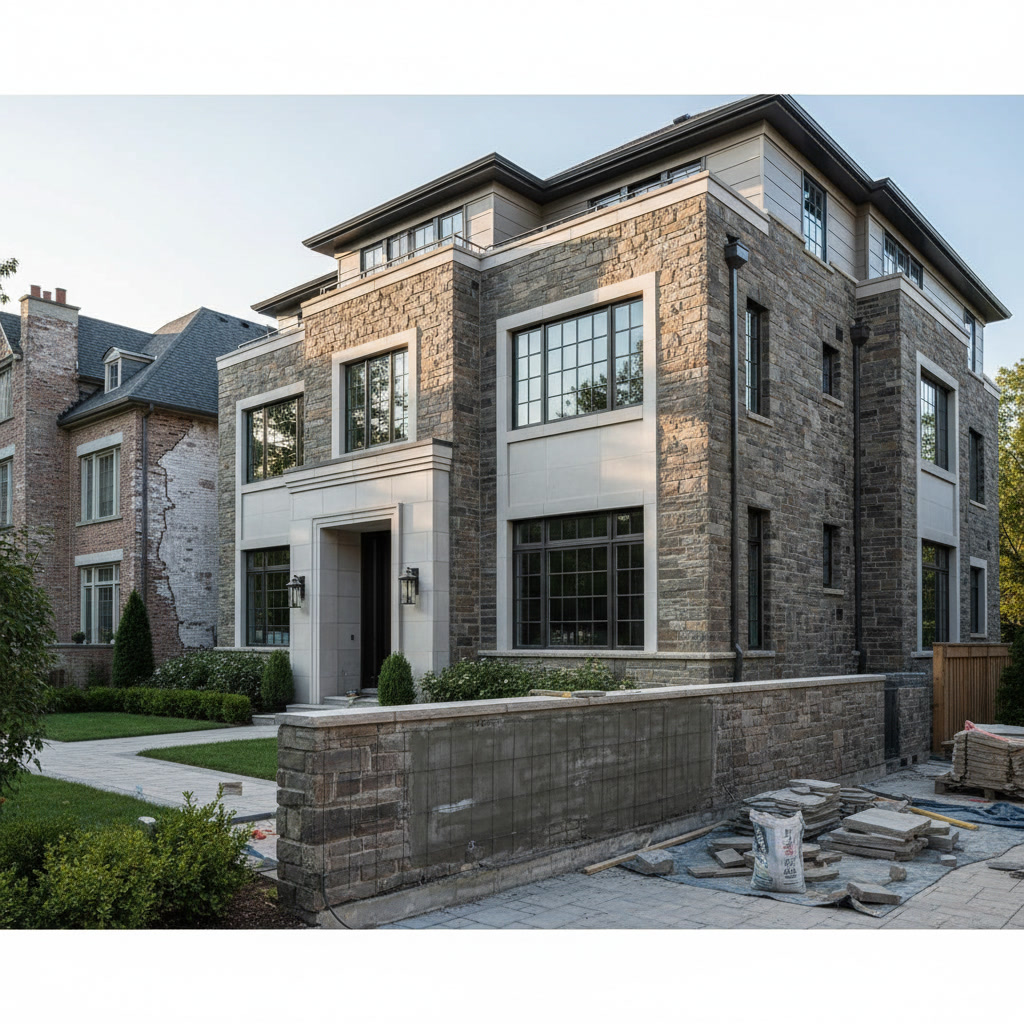
Beyond appearance, stone veneer creates a weather-resistant barrier that extends foundation life. New England experiences freeze-thaw cycles that cause concrete to crack and spall over time. Water enters minor surface imperfections, freezes, expands, and creates progressively larger damage with each winter cycle.
Stone veneer interrupts this process by keeping moisture away from the concrete substrate. Proper installation includes a weather-resistant barrier and drainage plane that channels water down and away from the foundation rather than allowing it to saturate the concrete. This protection proves especially valuable in areas with heavy snow loads and ice accumulation against foundation walls.
The material itself withstands extreme temperature swings without degradation. Natural stone has survived centuries in outdoor applications, and quality manufactured veneer replicates this durability through advanced production techniques that create freeze-thaw resistant units specifically engineered for cold climates.
Comparing Stone Veneer Options for Essex County Homes
Homeowners choosing stone veneer face two primary material categories, each with distinct characteristics:
Natural Stone Veneer: Cut from quarried stone, natural veneer offers authentic geological color, texture, and variation. Each piece displays unique patterns formed over millions of years. Common options include fieldstone, limestone, granite, and slate. Natural veneer typically costs more and requires skilled installation due to irregular shapes and sizes, but delivers unmatched authenticity.
Manufactured Stone Veneer: Created from Portland cement, aggregates, and iron oxide pigments, manufactured veneer replicates natural stone appearance at lower cost with more consistent sizing. Modern manufacturing produces highly realistic textures and colors. The uniform dimensions simplify installation and reduce labor time. Quality manufactured veneer performs comparably to natural stone in durability and weather resistance.
The choice often depends on architectural style and budget. Traditional New England homes pair beautifully with natural fieldstone that echoes historic stone walls throughout the region, while contemporary designs may benefit from the clean lines possible with manufactured units.
Installation Methods That Ensure Long-Term Performance
Professional installation makes the difference between veneer that lasts decades and veneer that fails within years. The process begins with surface preparation, ensuring the foundation is clean, sound, and properly sealed. Any significant cracks or structural issues require repair before veneer application.
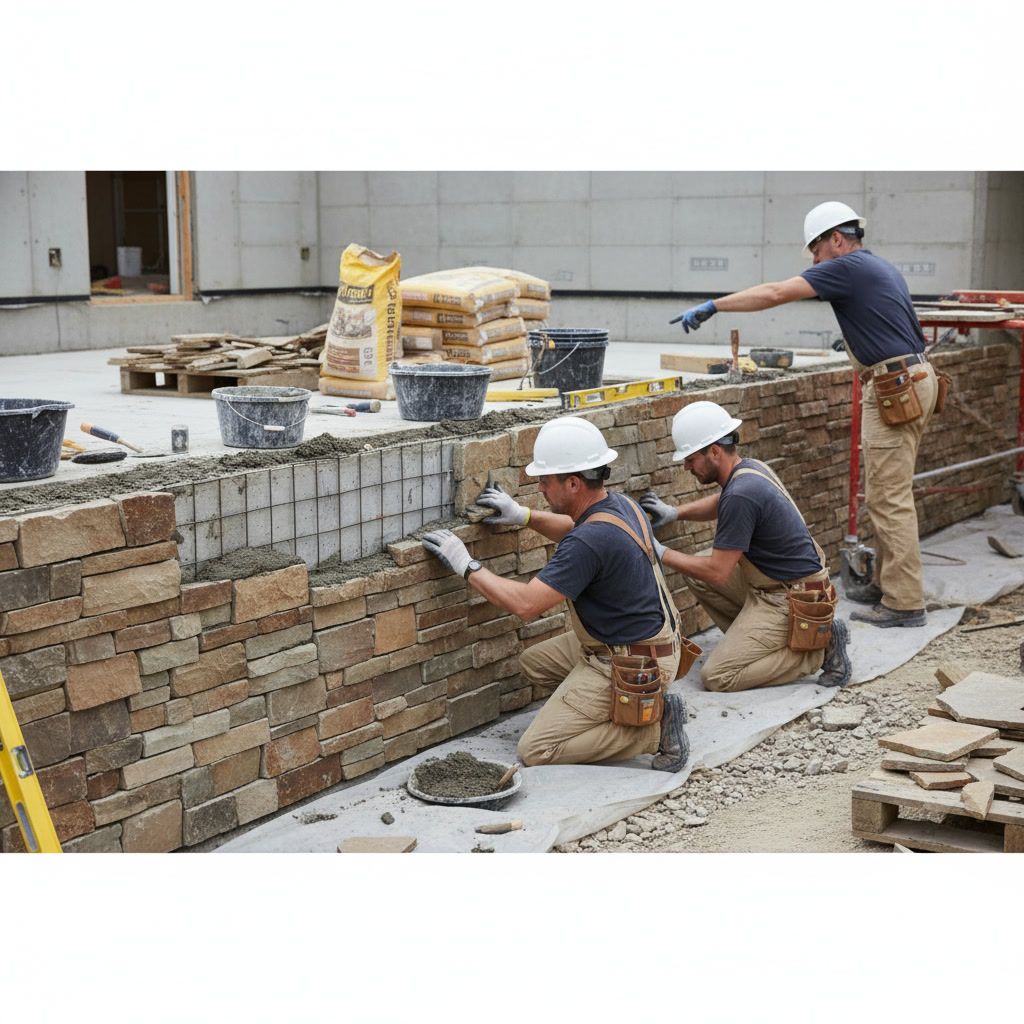
A weather-resistant barrier goes up first, followed by metal lath that provides mechanical attachment for the mortar. The veneer units attach using a thick mortar bed that bonds to both the lath and the back of each stone. Skilled concrete and masonry professionals ensure proper mortar coverage, avoiding hollow spots that trap water and lead to freeze damage.
Critical details include proper flashing at the top of the veneer to prevent water intrusion behind the installation, adequate clearance above grade to prevent soil contact and wicking, and appropriate joint tooling that sheds water rather than collecting it. These technical elements separate professional work from amateur attempts that look acceptable initially but fail prematurely.
Design Integration with Existing Landscape Elements
Stone veneer delivers maximum impact when coordinated with other exterior features. The material pairs naturally with stone-based hardscape features throughout the property, creating visual continuity that makes the entire landscape feel intentionally designed rather than assembled piecemeal over time.
Consider matching or complementing veneer with patios and walkways using similar stone types or colors. This coordination doesn’t require exact matching. In fact, varying the specific stone while maintaining a consistent color palette often produces more sophisticated results than identical materials everywhere.
The foundation treatment should also acknowledge architectural details. Homes with prominent stone chimneys benefit from veneer that echoes the chimney material. Similarly, properties with existing retaining walls create opportunities to tie these separate elements together through thoughtful material selection. You can see examples of successful integration in our approach to incorporating hardscape elements into cohesive landscape designs.
Quantifiable Property Value Increases from Foundation Upgrades
Real estate data consistently shows that stone veneer additions generate measurable returns on investment. Industry studies indicate that stone veneer applied to foundations and lower exterior walls increases perceived home value by 6-10%. For a property valued at $500,000, this translates to $30,000-$50,000 in added value from an investment typically ranging from $15,000-$25,000 for a complete foundation treatment.
The return comes from multiple factors. Stone signals quality construction and premium finishes to prospective buyers. It differentiates your property from similar homes in the neighborhood that retain basic concrete foundations. Perhaps most importantly, it addresses the critical first impression that shapes buyer interest during initial property viewings and online listing browsing.
Appraisers recognize stone veneer as a permanent improvement rather than cosmetic treatment, factoring it into comparative market analysis alongside other substantial upgrades. This classification ensures the investment translates to recognized value when the time comes to sell or refinance.
Maintenance Requirements and Long-Term Care
One often-overlooked advantage of stone veneer is the minimal maintenance required once properly installed. Unlike wood siding that needs periodic painting or vinyl that becomes brittle and cracks, stone maintains its appearance indefinitely with only occasional cleaning.
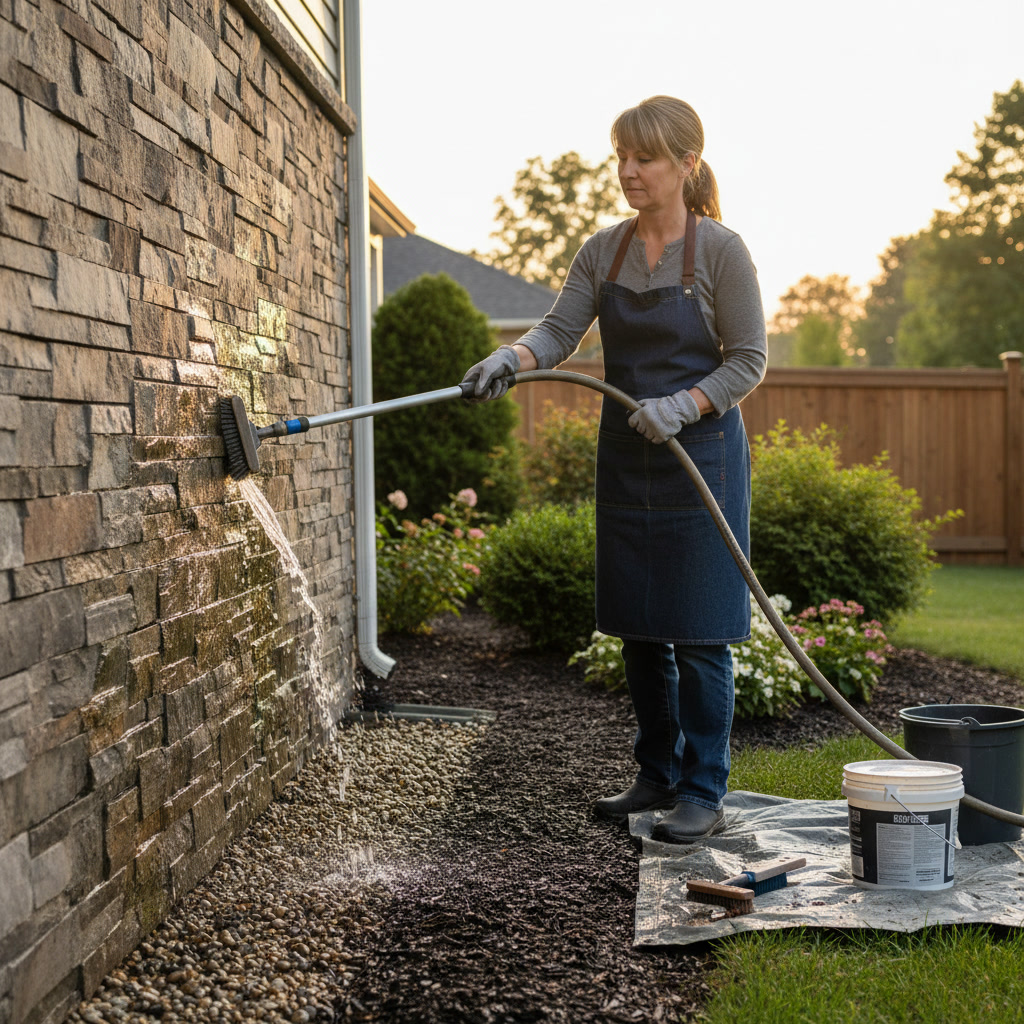
Annual inspection should check for any mortar joint deterioration or individual stones that have loosened. These issues occur rarely with quality installation but prove simple to address when caught early. A garden hose removes normal dirt accumulation, while stubborn staining may require gentle pressure washing at low PSI settings to avoid damaging mortar joints.
Efflorescence, the white mineral deposits that sometimes appear on masonry, occasionally affects stone veneer. This cosmetic issue resolves with specific masonry cleaners and doesn’t indicate structural problems. The appearance diminishes naturally over time as the installation cures and moisture migration decreases.
Cost Factors and Budget Planning for Foundation Veneer Projects
Stone veneer installation costs vary based on material selection, foundation height and perimeter length, site access, and existing condition. Natural stone typically runs $25-$50 per square foot installed, while manufactured veneer ranges from $15-$35 per square foot. These figures include materials, labor, and necessary preparation work.
Foundation height significantly impacts total cost since most homes have exposed foundation ranging from two to four feet above grade. A home with 150 linear feet of foundation and three feet of exposed concrete requires 450 square feet of veneer, translating to $6,750-$22,500 depending on material choice and complexity.
Additional costs may include foundation repair if significant cracks exist, excavation if soil covers desired veneer areas, or corner treatments and accent features that add visual interest. Professional estimates should itemize these elements separately so you understand exactly what drives the investment.
Seasonal Considerations for Installation Timing in Massachusetts
Stone veneer installation in Massachusetts works best during moderate weather when temperatures consistently stay above 40 degrees. Mortar requires specific temperature ranges for proper curing and bond development. Cold weather slows curing and can prevent adequate adhesion, while extreme heat causes too-rapid drying that weakens the final bond.
Spring and fall offer ideal conditions with mild temperatures and lower humidity. Summer installation works well but may require measures to slow mortar drying in direct sun. Winter installation proves challenging and often impractical, though heated enclosures can extend the season for urgent projects.
Planning veneer installation alongside other exterior work maximizes efficiency. Coordinating with stone veneer and foundation finish projects, driveway work, or landscape renovations allows contractors to stage materials once and complete multiple improvements while equipment is already on site.
Transform Your Property with Professional Foundation Enhancement
Stone veneer delivers immediate visual transformation and lasting value for properties throughout Massachusetts. The upgrade addresses the often-neglected foundation area that significantly impacts overall property appearance and buyer perception. Combined with weather protection and minimal maintenance requirements, veneer represents one of the most effective exterior improvements available.
Professional installation ensures your investment performs as intended for decades. Proper technique, quality materials, and attention to critical details separate successful projects from disappointing results. D.S. Landscaping & Construction brings extensive experience with stone veneer applications throughout Essex County, combining technical expertise with design insight to create foundation treatments that enhance your property’s unique character.
Ready to explore how stone veneer can transform your foundation and increase your property value? Contact D.S. Landscaping & Construction at 978 786 2087 to schedule a consultation and receive a detailed project estimate tailored to your specific property and goals.