New England winters are brutal on outdoor surfaces. Freezing temperatures, heavy snowfall, ice, and relentless freeze-thaw cycles can crack, heave, and destroy poorly chosen patio materials in just a few seasons. Add in humid summers and you face a year-round challenge that demands careful material selection.
Choosing the best patio materials for this climate means balancing durability, maintenance requirements, aesthetics, and budget. The right choice will give you decades of outdoor enjoyment, while the wrong one leads to cracking, staining, and costly repairs within a few years.
This guide examines the top patio materials proven to withstand New England weather, from traditional bluestone to modern permeable pavers, so you can make an informed decision for your outdoor living space.
Why New England Weather Demands Special Consideration
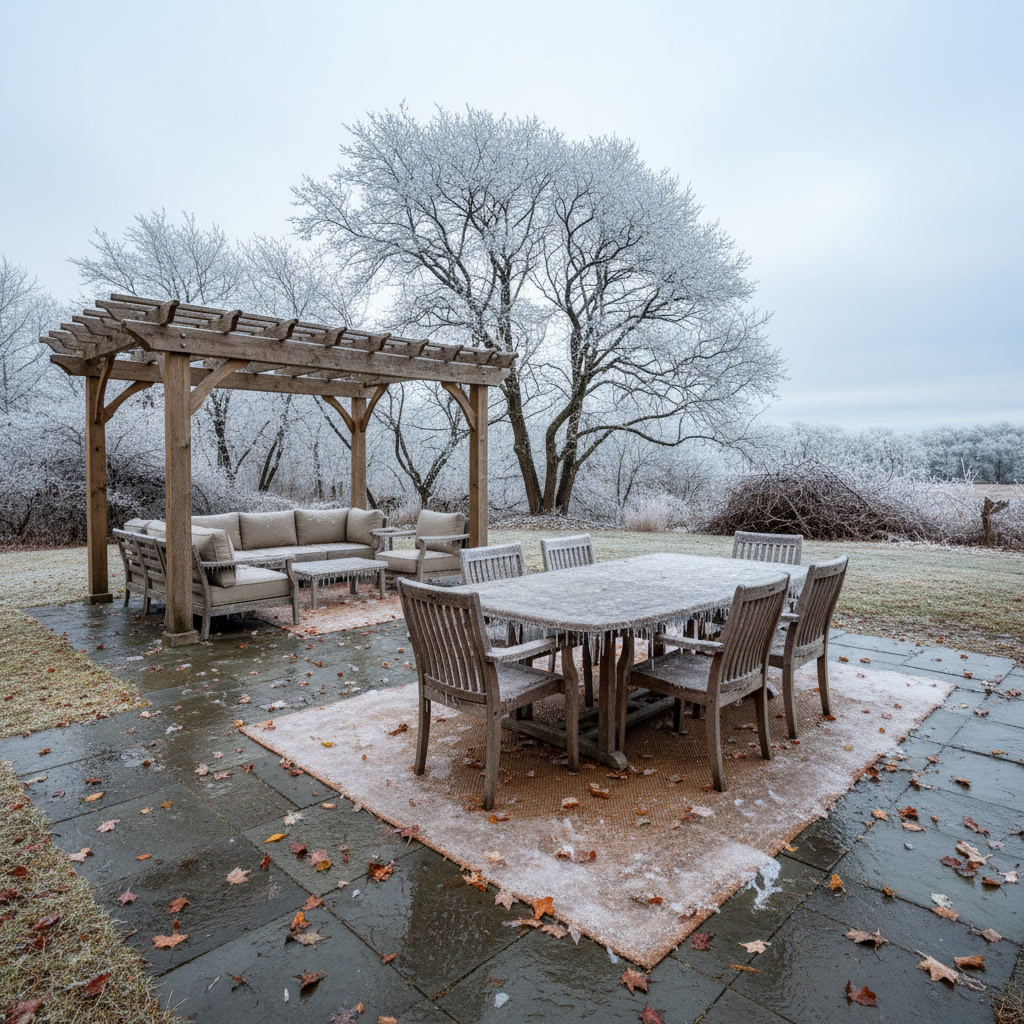
The freeze-thaw cycle is the primary enemy of outdoor hardscaping in Massachusetts and throughout New England. When water seeps into porous materials and freezes, it expands by roughly nine percent. This expansion creates internal pressure that cracks concrete, displaces pavers, and breaks apart weak stone.
A single winter can bring 40 to 60 freeze-thaw cycles in Essex County and surrounding areas. Materials that perform beautifully in milder climates often fail catastrophically here within three to five years.
Salt exposure adds another challenge. Road salt, sidewalk salt, and deicing products tracked onto patios accelerate deterioration in many materials. Calcium chloride and sodium chloride eat away at certain concretes and can stain natural stone.
Summer humidity and occasional heavy rainfall create their own issues. Poor drainage leads to standing water, which promotes moss and algae growth on some surfaces while contributing to erosion around patio edges.
Bluestone Patios
Bluestone remains the gold standard for New England patios, and for good reason. This dense sandstone quarried primarily in Pennsylvania and New York has proven itself over centuries of use in harsh northeastern climates.
Durability and Weather Resistance
Bluestone’s low porosity makes it highly resistant to freeze-thaw damage. Water absorption rates typically range from two to four percent, well below the seven percent threshold where freeze damage becomes common. Properly installed bluestone patios in Essex County regularly last 50 years or more with minimal maintenance.
The material handles salt exposure better than most alternatives. While prolonged contact with deicing salts can cause minor surface etching, bluestone won’t crumble or spall like weaker materials.
Appearance and Texture
Bluestone’s natural blue-gray color complements New England architecture beautifully. Thermal finishes provide excellent slip resistance when wet, making them ideal around pools. Natural cleft surfaces offer rustic charm, while honed finishes deliver a more contemporary look.
Color variations from piece to piece create organic visual interest without looking busy or chaotic. The stone weathers gracefully, developing a subtle patina that many homeowners prefer to the original appearance.
Cost Considerations
Expect to pay between $20 and $35 per square foot installed for a bluestone patio, depending on thickness, finish, and pattern complexity. While this represents a significant investment, the longevity and minimal maintenance requirements often make bluestone more cost-effective than cheaper alternatives over a 20-year period.
Concrete Patios
Concrete offers versatility and value, but not all concrete performs equally in New England conditions. The mix design, finishing techniques, and installation quality determine whether you get decades of service or early failure.
Stamped Concrete
Stamped concrete allows you to mimic the appearance of stone, brick, or pavers at a lower cost. When properly installed with air-entrained concrete (containing microscopic air bubbles that accommodate freeze-thaw expansion), stamped concrete can last 20 to 30 years in New England.
The key is using a six-inch thickness minimum, proper reinforcement with rebar or fiber mesh, control joints every eight to ten feet, and a quality sealer reapplied every two to three years. Skimp on any of these elements and you risk cracking within the first five years.
Color options are nearly limitless, though darker tones show salt staining more readily than lighter grays and tans. Multiple release agents can create realistic stone textures that feel natural underfoot.
Broom Finish Concrete
Traditional broom finish concrete costs less than stamped varieties, typically $8 to $15 per square foot installed. The textured surface created by dragging a broom across wet concrete provides excellent traction in wet conditions.
While less decorative than other options, broom finish concrete offers reliable performance when installed with proper air entrainment and adequate thickness. Many homeowners appreciate the clean, simple aesthetic that doesn’t compete with landscaping or architectural details.
Expansion joints are critical with any concrete patio. These planned breaks allow individual slabs to expand and contract independently, preventing random cracking. Joints should be placed every eight to ten feet in both directions.
Pro Tip: If you choose concrete for your patio, insist on air-entrained mix with at least five to seven percent air content by volume. This specification is essential for freeze-thaw durability in New England and should be documented on the ready-mix ticket.
Paver Patios
Interlocking concrete pavers have gained tremendous popularity in New England over the past two decades. Modern manufacturing techniques produce pavers that outperform many traditional materials in freeze-thaw resistance.
Why Pavers Excel in Cold Climates
Individual pavers can shift slightly during freeze-thaw cycles without cracking, unlike monolithic concrete slabs. This flexibility makes paver systems remarkably resilient. When a single paver does crack (rare with quality products), you can replace just that unit rather than demolishing and replacing an entire section.
High-quality concrete pavers achieve compressive strengths exceeding 8,000 psi, roughly double that of standard concrete. Water absorption rates under five percent ensure freeze-thaw durability matching or exceeding natural stone.
Design Flexibility
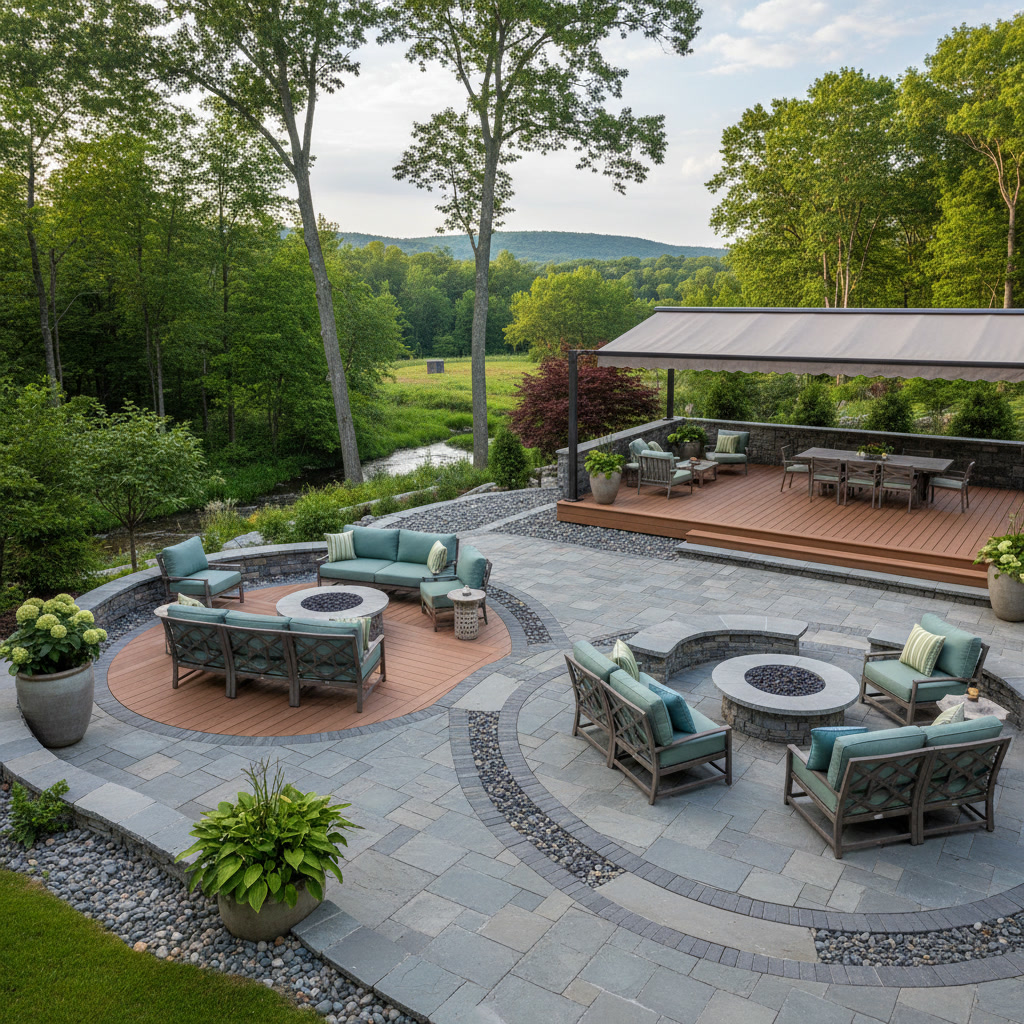
Pavers come in countless colors, shapes, and textures. Herringbone patterns add visual interest and structural interlock. Soldiers courses (border rows) create clean edges. Mixing complementary colors allows custom designs limited only by imagination and budget.
Permeable pavers offer an environmentally responsible option that reduces runoff and prevents ice buildup. Wide joints filled with crushed stone allow water to drain through the surface rather than pooling or running off. This can be particularly valuable on sloped properties or in areas with drainage challenges.
Installation Requirements
Proper base preparation is non-negotiable with pavers. A well-compacted crushed stone base at least six to eight inches deep provides stability and drainage. Stone dust or manufactured paver base creates a level setting bed.
Polymeric sand swept into joints hardens when activated with water, locking pavers together and preventing weed growth. This product must be reapplied every five to seven years as it slowly erodes.
Edge restraints (plastic or aluminum) prevent pavers from creeping outward over time. Without proper edging, even the best paver installation will eventually fail.
Granite Patios and Walkways
Granite represents the most durable natural stone option for New England patios. This igneous rock formed under extreme heat and pressure resists weathering better than any sedimentary stone.
Water absorption in granite typically measures well under one percent. Freeze-thaw damage is virtually unknown in properly installed granite patios. The material also resists salt damage, staining, and scratching better than softer stones.
Thermal-finished granite provides excellent slip resistance while showcasing the stone’s natural crystal structure. Flamed finishes create a rougher texture ideal for steps and high-traffic areas.
Color options range from classic grays to warm browns, dramatic blacks, and even pink or green tones depending on mineral composition. Many suppliers offer locally quarried New England granite, reducing transportation costs and supporting regional quarries.
Granite’s primary drawback is cost. Expect to pay $25 to $45 per square foot installed, making it one of the more expensive options. However, granite patios regularly outlast the homes they serve, potentially making them the last patio you’ll ever install.
Flagstone and Other Natural Stone Options
Beyond bluestone and granite, several other natural stones perform well in New England conditions when properly selected and installed.
Limestone Patios
Dense, high-quality limestone can work in New England, though it requires more careful selection than bluestone or granite. Avoid highly porous limestone varieties that absorb more than five percent water by weight. Properly sealed limestone develops a beautiful patina over time.
Thermal or flamed finishes improve slip resistance on limestone’s naturally smooth surface. Colors range from warm beiges to cool grays, often with subtle fossil inclusions that add character.
Slate Patios
Slate’s layered structure creates beautiful natural textures but can be problematic in freeze-thaw conditions. Water that penetrates between layers can cause delamination (splitting into thin sheets). Select only slate rated for exterior use in northern climates and ensure proper sealing.
When it performs well, slate offers rich colors from purple-grays to greens and golds. The natural cleft surface provides good traction, though some slate varieties become slippery when wet.
Fieldstone and Cobblestone
Rounded fieldstone and cobblestone create charming Old World aesthetics perfect for historic New England properties. These materials are inherently durable, having survived centuries of weathering in their natural state.
The irregular shapes make installation more labor-intensive, driving up costs. Uneven surfaces can be challenging for furniture placement but work beautifully for walkways and accent areas within larger patios.
Key Takeaway: When selecting any natural stone for New England applications, request the water absorption test results. Materials absorbing less than five percent water by weight will generally perform well through decades of freeze-thaw cycles.
Brick Patios
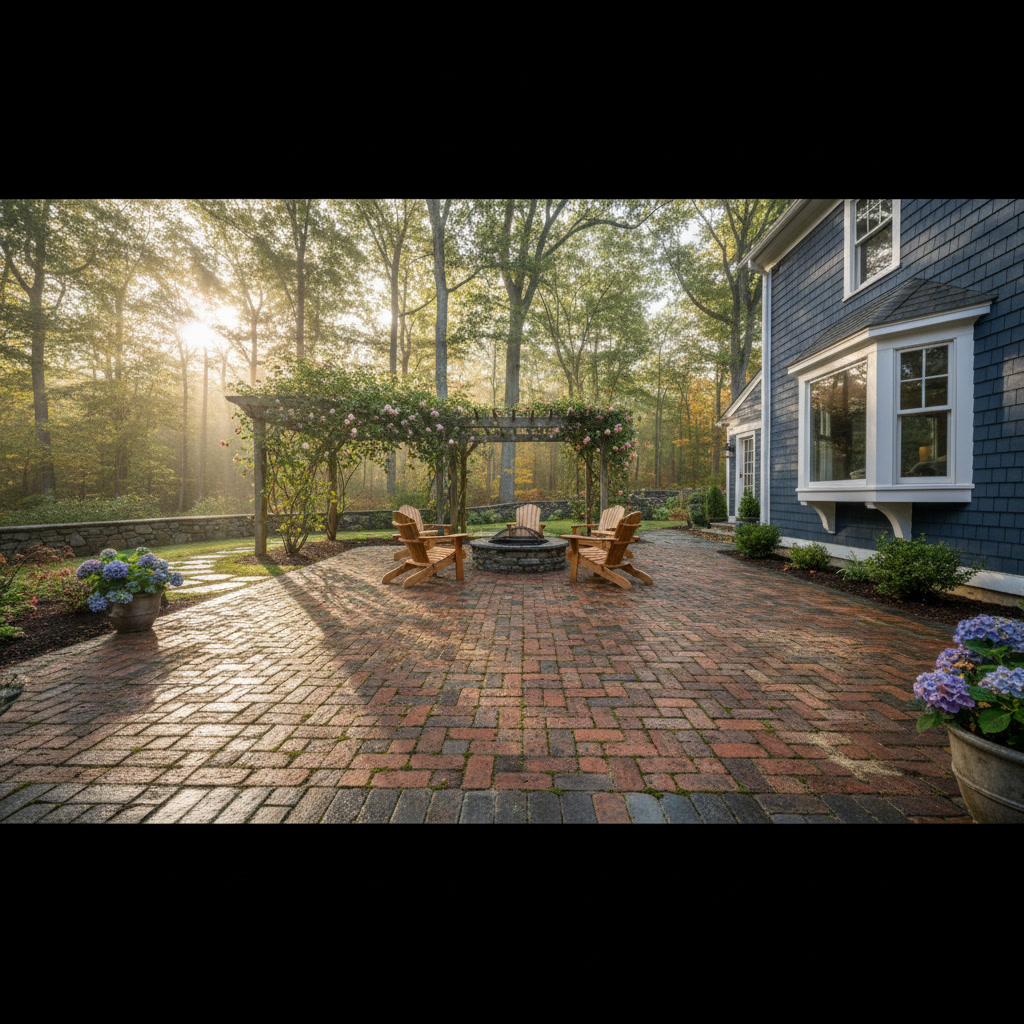
Brick patios evoke classic New England charm, but not all brick survives harsh winters. Only brick specifically rated for paving applications (SW grade, severe weathering) should be used for patios in cold climates.
Clay pavers fired at high temperatures develop lower porosity than standard building brick. Water absorption under six percent ensures adequate freeze-thaw resistance. Many manufacturers now produce brick pavers that rival concrete pavers in durability.
Brick’s warm red and brown tones complement both historic and contemporary architecture. Running bond, basket weave, and herringbone patterns create visual interest. Mixing different colored bricks allows custom designs and borders.
Proper installation over a well-drained base is critical. Brick patios installed directly on sand or soil without adequate crushed stone base inevitably fail within a few years. Plan for the same base preparation you would use for concrete pavers.
Expect to pay $15 to $28 per square foot installed for quality clay paver brick. Reclaimed brick costs more but offers unmatched character and proven durability.
Comparing Maintenance Requirements
Understanding ongoing maintenance helps calculate true lifetime costs for different patio materials.
Low Maintenance Options
Granite and bluestone require minimal care beyond occasional sweeping and rinsing. Sealing is optional; many homeowners prefer the natural weathered appearance. If you choose to seal, reapplication every three to five years maintains stain resistance.
Quality concrete and clay pavers also demand little attention. Replacing polymeric sand in joints every five to seven years represents the primary maintenance task. Occasional cleaning with a pressure washer keeps colors vibrant.
Moderate Maintenance Materials
Stamped and standard concrete patios benefit from sealer reapplication every two to three years. This protects against salt damage, staining, and surface deterioration. Cracks should be repaired promptly to prevent water infiltration and expansion.
Limestone and other softer natural stones require regular sealing to prevent staining and moisture penetration. Plan on annual inspection and cleaning, with sealer refresh every two to three years.
Preventing Winter Damage
All patio materials benefit from proper snow removal techniques. Plastic shovels prevent scratching and chipping. Avoid metal blades and aggressive ice chipping that can damage even durable materials.
Use calcium magnesium acetate or sand rather than rock salt when deicing is necessary. These alternatives are less damaging to both hardscaping and surrounding vegetation.
Ensure proper drainage around patio edges. Standing water and ice buildup accelerate deterioration regardless of material choice. Clean drainage channels and check that water flows away from the patio and house foundation.
Installation Factors That Impact Longevity
Even the best patio materials fail prematurely when installed incorrectly. Several factors determine whether your investment lasts decades or requires replacement within years.
Base Preparation
A properly prepared base is more important than material selection for long-term performance. Excavate to proper depth, typically eight to twelve inches below finished grade. Remove all organic material and unsuitable soil.
Crushed stone base material should be compacted in three to four inch lifts using a plate compactor or roller. Each layer must achieve at least 95 percent compaction before adding the next. Shortcuts here guarantee future settling and failure.
Slope the base away from structures at a minimum two percent grade (one-quarter inch per foot). This prevents water from pooling against foundations and ensures proper drainage throughout the patio surface.
Proper Drainage
Water is the enemy of all hardscaping in freeze-thaw climates. Beyond surface slope, consider subsurface drainage for challenging sites. Perforated pipe in a gravel bed beneath the patio base carries water away before it can cause problems.
Direct downspouts away from patio areas. The concentrated water flow from roof drainage can overwhelm even well-designed patio drainage systems, leading to erosion and settling.
Joint Details
Expansion joints in concrete, polymeric sand in pavers, and proper mortar joints in natural stone all serve critical functions. These details allow movement, prevent cracking, and keep water where it belongs.
Never seal joints completely in any patio system. Some water movement through the surface is inevitable and even beneficial. The base must accommodate this moisture without retaining it.
Making the Right Choice for Your Property
The best patio materials for your specific situation depend on several factors beyond weather resistance alone.
Budget obviously plays a role. Concrete and standard pavers offer excellent performance at lower initial costs. Natural stone requires greater upfront investment but can be viewed as a permanent improvement.
Your home’s architectural style should influence material selection. A contemporary home might suit sleek granite or polished concrete, while a colonial revival practically demands bluestone or brick. Fieldstone complements rustic or farmhouse styles.
Intended use matters too. High-traffic areas benefit from extremely durable materials like granite. Decorative spaces might justify more exotic stone choices. Pool surrounds demand slip-resistant surfaces like thermal bluestone.
Site conditions including slope, soil type, and drainage patterns affect both material choice and installation requirements. Properties with challenging drainage might benefit from permeable pavers. Steep slopes may require terracing with retaining walls before patio installation.
Professional assessment can identify site-specific factors you might overlook. Soil bearing capacity, frost depth, and existing drainage all impact proper installation techniques.
Frequently Asked Questions
What is the most durable patio material for Massachusetts winters?
Granite offers the best durability for harsh New England winters, with water absorption under one percent and virtually no freeze-thaw damage. Bluestone runs a close second and typically costs less while still providing 50-plus years of service when properly installed.
How thick should a concrete patio be in New England?
Concrete patios in freeze-thaw climates should be at least six inches thick with proper reinforcement and air-entrained mix. This thickness provides adequate strength to resist cracking from frost heave and thermal expansion. Thinner concrete inevitably cracks within a few seasons.
Do I need to seal my bluestone patio?
Sealing bluestone is optional. Unsealed bluestone weathers naturally to a softer gray-blue tone that many homeowners prefer. Sealing maintains the original color, enhances stain resistance, and makes snow removal easier. If you choose to seal, reapply every three to five years for best results.
Why are pavers better than concrete for cold climates?
Individual pavers can shift slightly during freeze-thaw cycles without cracking, while monolithic concrete slabs crack when they cannot accommodate movement. Pavers also allow easy replacement of damaged units, whereas concrete requires cutting out and patching entire sections. The segmental nature of paver systems provides inherent flexibility that solid concrete lacks.
How much does a professionally installed patio cost in Essex County?
Patio costs vary widely by material and site conditions. Basic concrete runs $8 to $15 per square foot, stamped concrete $12 to $22, pavers $15 to $28, bluestone $20 to $35, and granite $25 to $45. These ranges include excavation, base preparation, materials, and installation. Complex sites with drainage challenges or significant grading add to these baseline costs.
Creating Outdoor Spaces That Last
Selecting the best patio materials for New England weather requires balancing durability, aesthetics, maintenance requirements, and budget. Bluestone, granite, quality pavers, and properly specified concrete all perform well when installed correctly over a well-prepared base with adequate drainage.
The material you choose will shape your outdoor living experience for decades. Investing in quality materials and professional installation pays dividends in longevity, appearance, and enjoyment of your outdoor space.
D.S. Landscaping & Construction has installed hundreds of patios throughout Essex County and surrounding areas in Massachusetts. Our team understands exactly which materials perform best in New England conditions and how to install them for maximum longevity. We specialize in patio design and construction using bluestone, granite, pavers, and concrete, backed by proper base preparation and drainage design. Whether you are considering a complete backyard transformation or replacing a failing patio, our experience with concrete and masonry ensures your investment will withstand decades of New England weather. Contact us at +19787862360 to discuss your patio project and schedule a consultation.